Thursday, February 17, 2011

All in a day's work

It was the second transect day of the month. Transects 3 and 6 are on the northern part of the hacienda while 15 and 16 are on the southern edge; a very long walk. As my eyes scoured the ground for tracks and scats, and as I walk from one transect to another, my mind collated what had transpired and what hadn’t during what I considered, the First Half.

We mapped the entire hacienda, established our transects, put up our hair snares, and put out our live traps. We found scats and tracks, and in rare times, what we suspect to be bird kills by leopard cats. The hair snares never attracted anything but dust and mud. And the traps remained empty save for the live bait. We got sick on field, thankfully, quite rarely. Some of our live bait died and had to be replaced. One sakada (cane cutter) was killed by another sakada, and since no one knew who it was, or more accurately, no one would speak up on who it was, the person involved in the murder is still working in the hacienda. And the cane is almost gone.

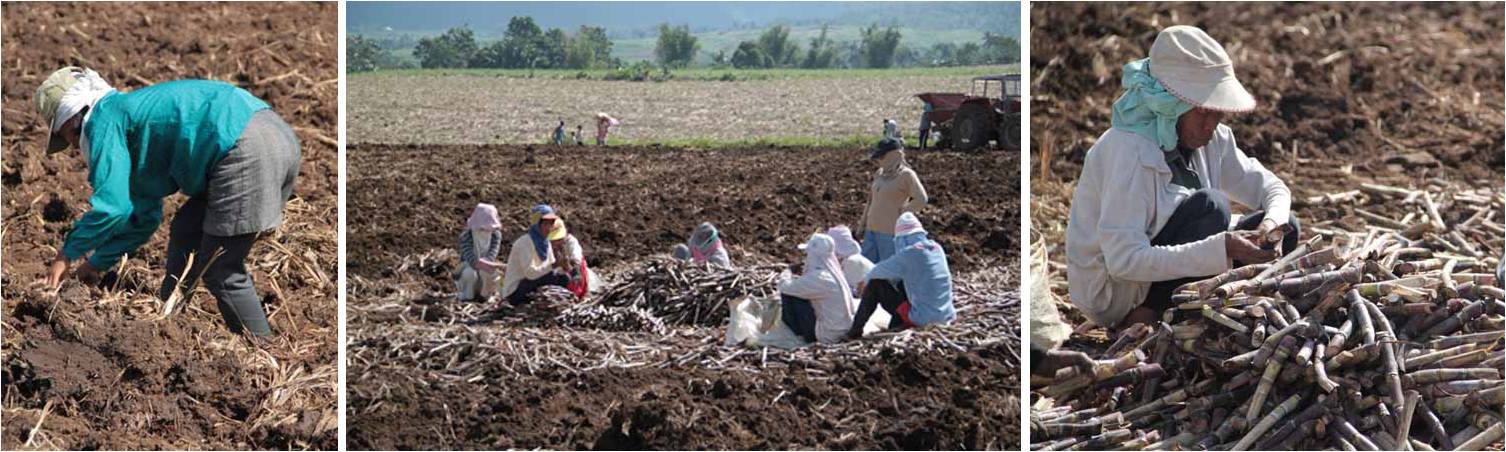
I passed by a group of women in one of the newly plowed fields. Some were sorting planting materials, while some were distributing planting materials between rows, and the rest were on their hands and knees, planting cane. It was a little past 10 in the morning, and the sun was high up. Most of the women looked up as I passed, so I called out a ‘good morning’ and waved a friendly hand. They wave back. They were wearing long-sleeved shirts, skirts or shorts over trousers, and head protection consisting of a t-shirt draped over the head tied securely around the forehead by a towel or another piece of t-shirt, or hats.

I approached one sorting party and chatted with them. They’ve been on the field since dawn, and they’ll be there until the afternoon, when they finished this parcel. It was only past 10 in the morning, but the sun is scorching, and there was no cover to be had. It must’ve been around about 32 °C, and it will only get hotter as the day progresses. These women will get burned. And they do, every day, working in these cane fields since harvest started in October. But at least there is work. Come off harvest starting June, and while cane is growing, the cane fields of Negros are usually empty, save for some maintenance activities.

I bid them goodbye, and turned towards Transect 3. The continued their work under the scorching heat. All in a day’s work.

 

Saturday, November 20, 2010

A different ballgame

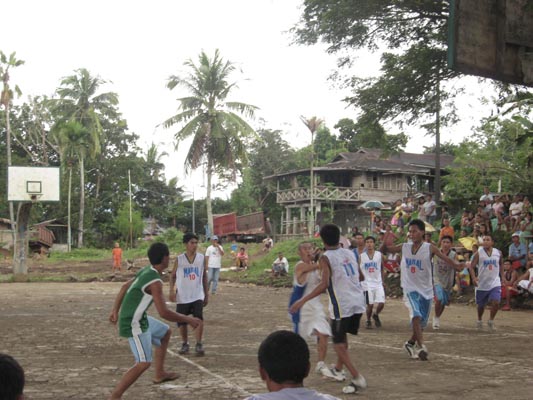
Basketball to Filipinos is like football (soccer) to Brazilians. We just love the game. So much so that if one goes around the Philippines, you’ll find basketball courts in villages everywhere, even in the middle of the streets (the two rings are on either side of the street). Not to mention a lot of the work offices, both private and government. And, everyone watches.

As such, I thought it would be a good idea to have one of the basketball teams of the hacienda carry the name ‘Maral’ (the local name for the leopard cat). After all, everyone comes to the game, even people from other haciendas. This annual basketball league games start from the second week of November and lasts until before Christmas; quite a bit of exposure for the leopard cat, and an unconventional one at that.

So I went to my first game earlier today. The team’s jerseys were just hot off the tailoring shop, and I was eager to see how they’d fare. More importantly, I was anxious to see how the audience will receive them. This is already their second game, and they had changed their name from ‘Wildcats’ to ‘Maral’.

The game has already started by the time we got there. My team is on its element. And the people were cheering: "Maral! Maral!" I was fervently hoping that subconsciously, their cheers for the cat that frequents their cane fields will penetrate them, and that consciously, they will be our allies in conservation.

Wednesday, November 17, 2010

“…We will understand only what we are taught.”

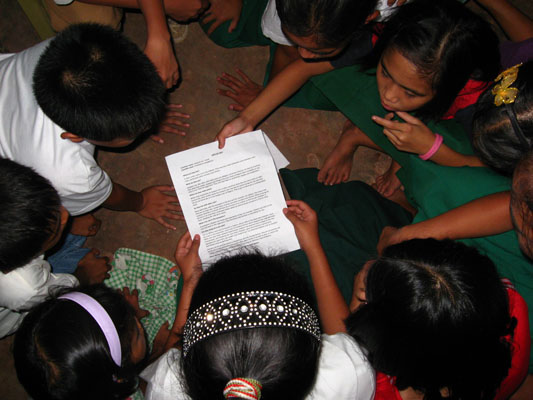
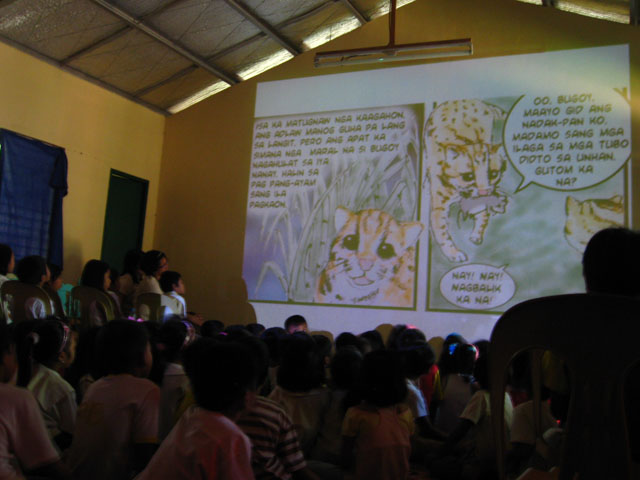
It was our trial run: Ara-al Elementary School. Having experienced doing a full-on lecture with elementary students, I begged off this time. I wanted to do something that is easily digested, informative, fun, and something that will get them to think. We succeeded with the story-telling and the modified 20 Questions.

However, there is one huge frustration, and I noticed this when I played Frans Lanting’s 2005 TED talk to pass time while one class goes out and another comes in. The children, in all levels, readily identified the large African mammals. I thought, I wonder how they’d do with Philippine wildlife? I already had a hunch they won’t do as well as they did with the African fauna, and I was proven right when I flashed a leopard cat photo and the class roared, “Tiger!”

I would’ve thought that these children, who are growing up in an area teeming with native wildlife, would know them. City kids don’t fare well with native wildlife because TV exposed them to exotic fauna, and having grown up in the city, is limited to pets and commensal species. But apparently, these rural kids are about the same.

My frustration is two-pronged. One is with their teachers, who it turns out, teach their kids exactly what they know and were able to identify (i.e. exotic megafauna). And the second, and more important one, is with myself and colleagues in the conservation sciences. And the first is actually very much connected to the second.

How many of us scientists will admit that we lack the ability to communicate ourselves to those we call the general public? Even more so, how many of us will admit that we cannot teach?

Having read quite a few papers, scientific publication isn’t really very digestible. And I’d probably get shot for saying this, but it is boring, and frigid. Boring and frigid to those who do not belong in that field. I’ve spent about six years in two universities, and I’ve had numerous professors, most of them scientists. Almost all of them shine in their respective fields, and are well-respected by colleagues. But only a handful can actually reach out to their students; communicate with them (as opposed to ‘TO them’); and impart themselves to their students.

My thoughts? For those who can teach, teach. For most of us who can’t, inform those who teach.

Tuesday, November 9, 2010

A hectare a day


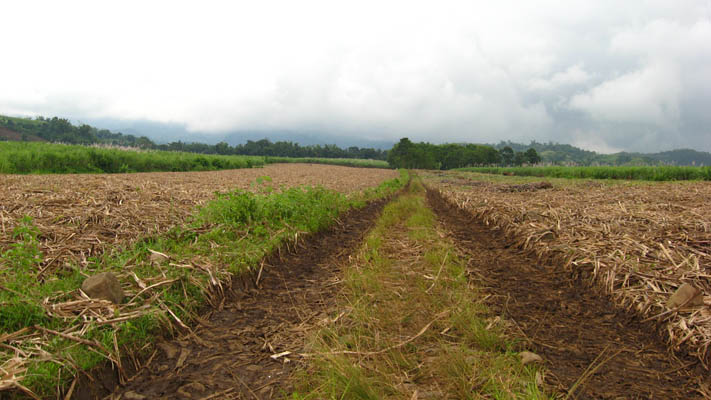
It’s only been a week since harvest started, and already, it has changed the landscape dramatically. It’s not that I have not seen a harvested field; it’s that it feels quite different to see what used to be vast expanse of sugarcane turn into fields of dried cane leaves, flat on the ground, one hectare a day.  The sound of the wind as it rustles through the tall cane is no more. I no longer hear the sounds of the birds shuffling under the cane, nor do I see them perching amongst the leaves. It is unsettling to walk through these fields without the cane overshadowing me. I remember taking shelter amongst them, when one rainy transect day, lightning hit close to the ground. What if we have another one of those lightning-happy days? There will be no more cane to take cover in.

As I gaze upon these harvested fields, I am frustrated by my continued inability to answer one of the fundamental questions of this research: where do the leopard cats go?

Tuesday, November 2, 2010

The doldol tree


I heard this story when I was still working with FFI-PBCP doing an ethnobiological survey of the distribution and conservation status of the leopard cat. I was talking to the women in an upland barangay in Antique, and they said, “You know the doldol [Ceiba pentandra] means a great deal to us.” “How so?,” I wondered out loudly to them. They smiled, “Because when the doldol dehisces, we know our men will be coming home soon.”

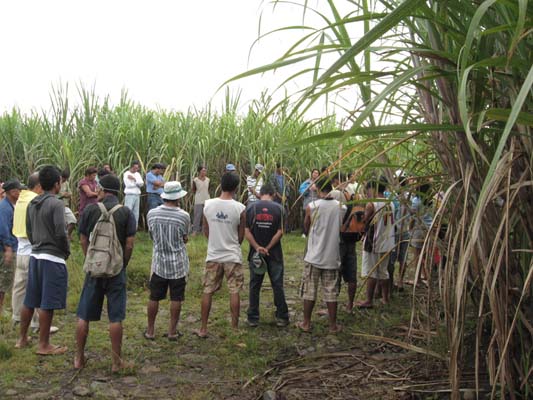
The sakadas arrived in the hacienda the day before. There are about 70 of them; all of them from Antique. As I stood before them early this morning, discussing the project, I peered through their faces. Some are young, some are about my age, and some are older. In the next seven months, these men will be harvesting the cane. They will be seeing our live traps, and our hair snares. Chances are, they will be uncovering kitten, encountering adult cats. We need to know if they do. I also asked them to let the cats be. I explained why. They seem to understand. Some were nodding their heads. Most were just listening.

We shall see. I am hopeful though.

Saturday, October 30, 2010

Hello, food

We went out early in the morning to make a round of the traps. While on our way down Transect 8 where two traps were deployed, we noticed leopard cat tracks heading east. We hurried to the first trap. Nothing. We did the usual routine of replenishing the food and water, and hurried on to the next one. Nothing. As we walked to the next trap in Transect 12, we saw more tracks, still heading east. It looks as if the cat just passed by two of our traps.

The cat probably took a look at the live bait in the trap, and said, “Hello, food. Too bad you’re in the trap.” And passing the second one, it must’ve said, “Tsk tsk tsk. Such a waste!”

Wednesday, October 27, 2010

Hope for harvest

We did the usual things we do every morning when we check traps: make coffee, get the chicks that will be replacing yesterday’s bait ready, prep some food and water for our live baits, and then take off. This morning was different though. Today will be the blessing of the cane.

It started only about three years ago for this hacienda. People come to pray for a good harvest season, which will last from November to around June of next year. One may think that with the onset of harvest, the crop year has come to a full cycle. It hasn’t. Many things can still go wrong during the long harvest period. The female pastor’s prayer revealed so much of the dynamics of cane harvest, and for someone who didn’t grow up in a farm, it was fascinating for me. It wasn’t only inclement weather, or pest, but the people themselves, who are involved in harvest.

In a few days, the sakadas (cane cutters who were hired by a middleman from another place or island) will come to the hacienda. They will be housed in the quarters solely their own in the middle of the tiny hacienda village. Having so many people in such a small place for an extended period of time creates negative energy sometimes, and it was not only once that we were told of fights breaking up between the locals and the sakadas.

But today everyone is hopeful. That this harvest season will bring not only the owner, but also the people, a bit of blessing, and the hacienda, peace.